

The IKEA Effect: Why We Defend What We Built.
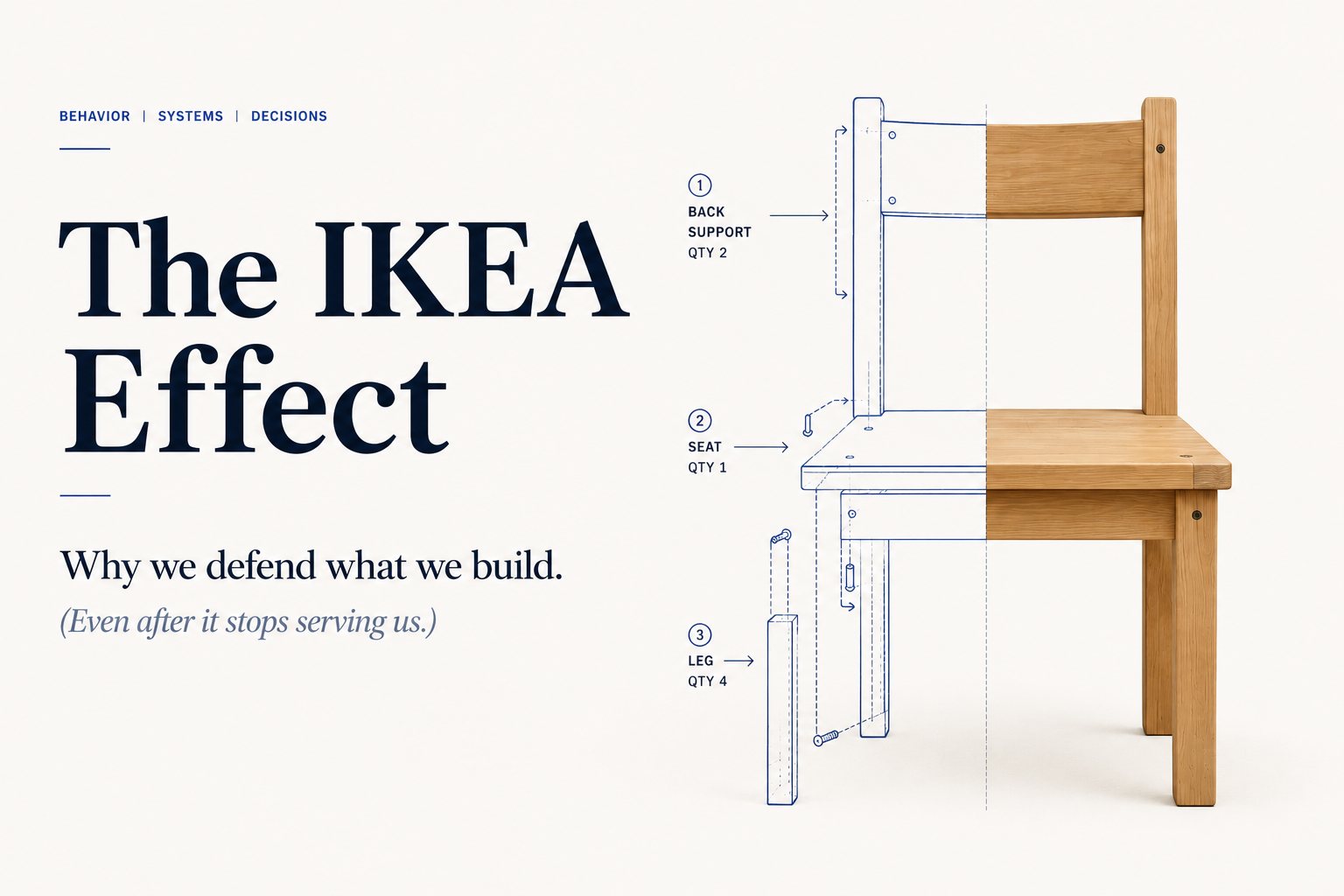
People value disproportionately what they helped build. The bias is partly adaptive and half distorting, and it rarely announces which half it is. The work, in any operation, is telling them apart.
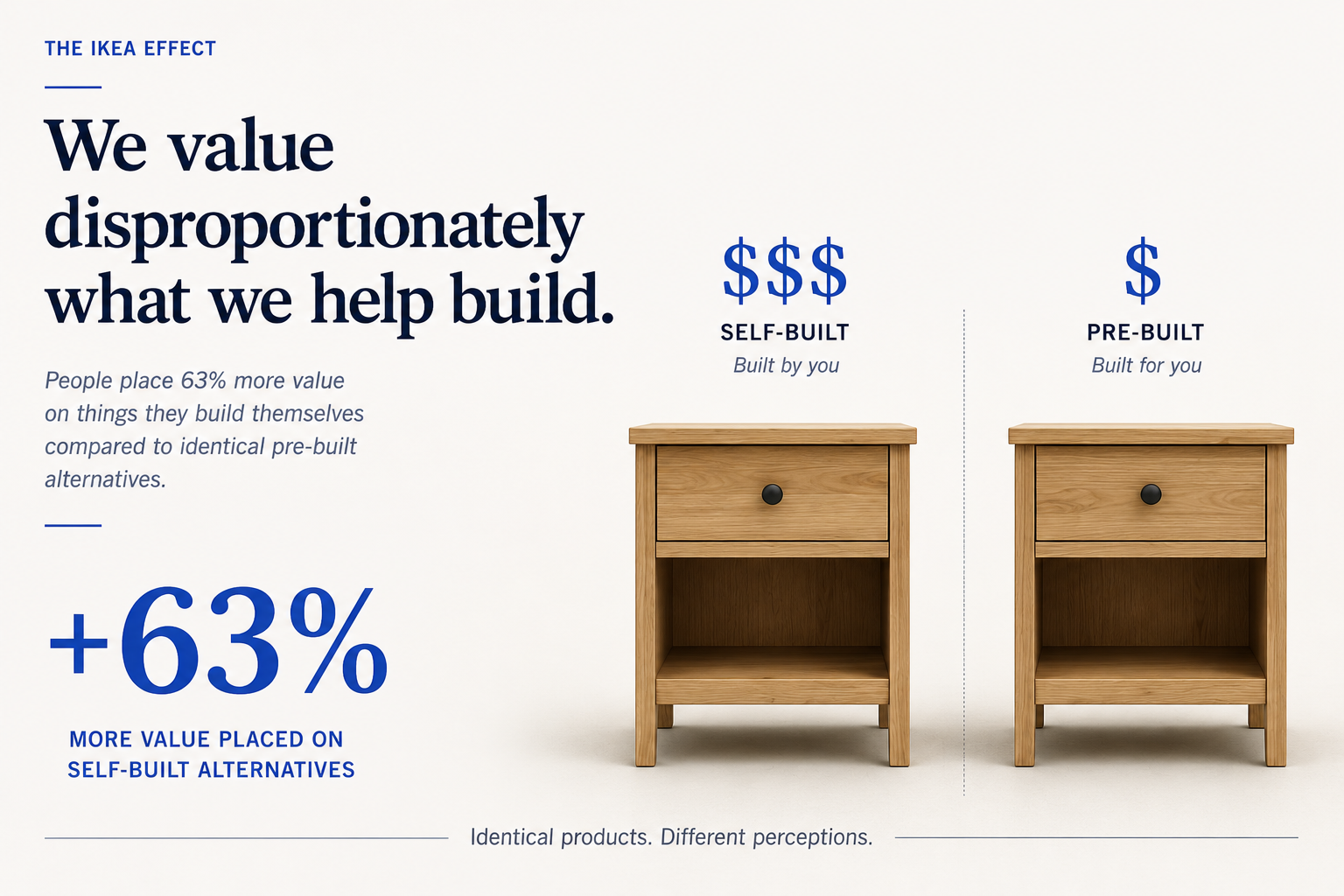
Identical Objects · A Measurable Premium for Self-Built
In 2011, three researchers at Harvard and Yale handed participants a flat-pack box of IKEA components and asked them to assemble it. Then they asked: “What’s it worth?”
Participants who built the box themselves valued it 63% higher than identical pre-built ones. Norton, Mochon, and Ariely repeated the experiment with origami cranes, with Lego sets, and with other small construction tasks. The premium held. The labor itself created the value, not the outcome, not the quality, just the act of having built it. They named the phenomenon the IKEA Effect.
It is one of the most consistently underestimated dynamics in how organizations relate to their own operations.
When Labor Leads to Love
What gets built collaboratively, in any organization, gets defended. The CFO who shaped the budget process will fight for it; the CFO who inherited it will quietly route around it. The same bias holds for software platforms, operating models, brand systems, governance frameworks, and anything an organization builds rather than buys.
The defense is real, and it’s often what gives the work its longevity. People who built a thing know why each piece is there, what it’s for, what it replaced, and what was tried and abandoned. That knowledge is encoded in the artifact in ways that don’t survive a clean handoff. Tear out a workflow that lives in someone’s head, and you don’t just lose the workflow, you lose the decade of accumulated judgment that produced it. The defense is often correct.
“The bias that creates ownership is the same bias that creates inertia.”
It also proves that the bias is most likely to keep an organization tied to a system long after a simpler approach would serve them better. The labor that creates ownership is the same labor that creates inertia.
The premium people pay for items they assembled themselves over identical pre-assembled ones, in the original IKEA Effect study.
Source: Norton, Mochon & Ariely, “The IKEA Effect: When Labor Leads to Love,” Journal of Consumer Psychology, 2012
63%
The Dual Nature
Subsequent research refined the picture in ways that matter. The effect requires the build to be completed; half-finished work creates frustration, not attachment. Susceptibility varies by individual: someone who enjoys the shaping process responds positively to co-creation; someone who delegates operations specifically because they don’t want to think about them experiences the same labor as imposition.
Over time, the effect can shade into sunk cost behavior: The ownership that drove early adoption becomes the inertia that resists later adaptation.
None of which makes the IKEA Effect wrong. It makes it complicated. The labor itself creates the attachment. The attachment is real. Whether it’s earned by the quality of what was built is a separate question.
What This Looks Like in Operations
Insurance operations are full of things people built and now defend. The renewal workflow that has lived in someone’s head for fifteen years. The AMS configuration the prior ops director set up before leaving. The underwriting questionnaire someone fought hard to define and now refuses to revisit.
Some of those defenses are correct. The workflow that lives in someone’s head is often there because they spent a decade learning what works, and tearing it out without listening costs more than it saves. The questionnaire was fought for because the version that came before missed the questions that catch bad accounts. The defender knows things the next person won’t know for years.
Some of those defenses are inertia wearing the costume of expertise. The configuration was right for a different volume, a different mix, a different team. The questionnaire stops at the questions that mattered when it was built and ignores the ones that have emerged since. The defender built it long enough ago that the defense has become reflex rather than reasoning.
Both can be true. Sometimes both are true at once. A familiar arc:
The longtime ops director built the renewal process in 2014, when the book had 200 accounts, and three people ran it. It was good, careful, customized, and defensible.
Ten years on, the book is 2,000 accounts and the team is twelve. The process still works, sort of, and slows them down a little more each quarter. She defends it in every meeting.
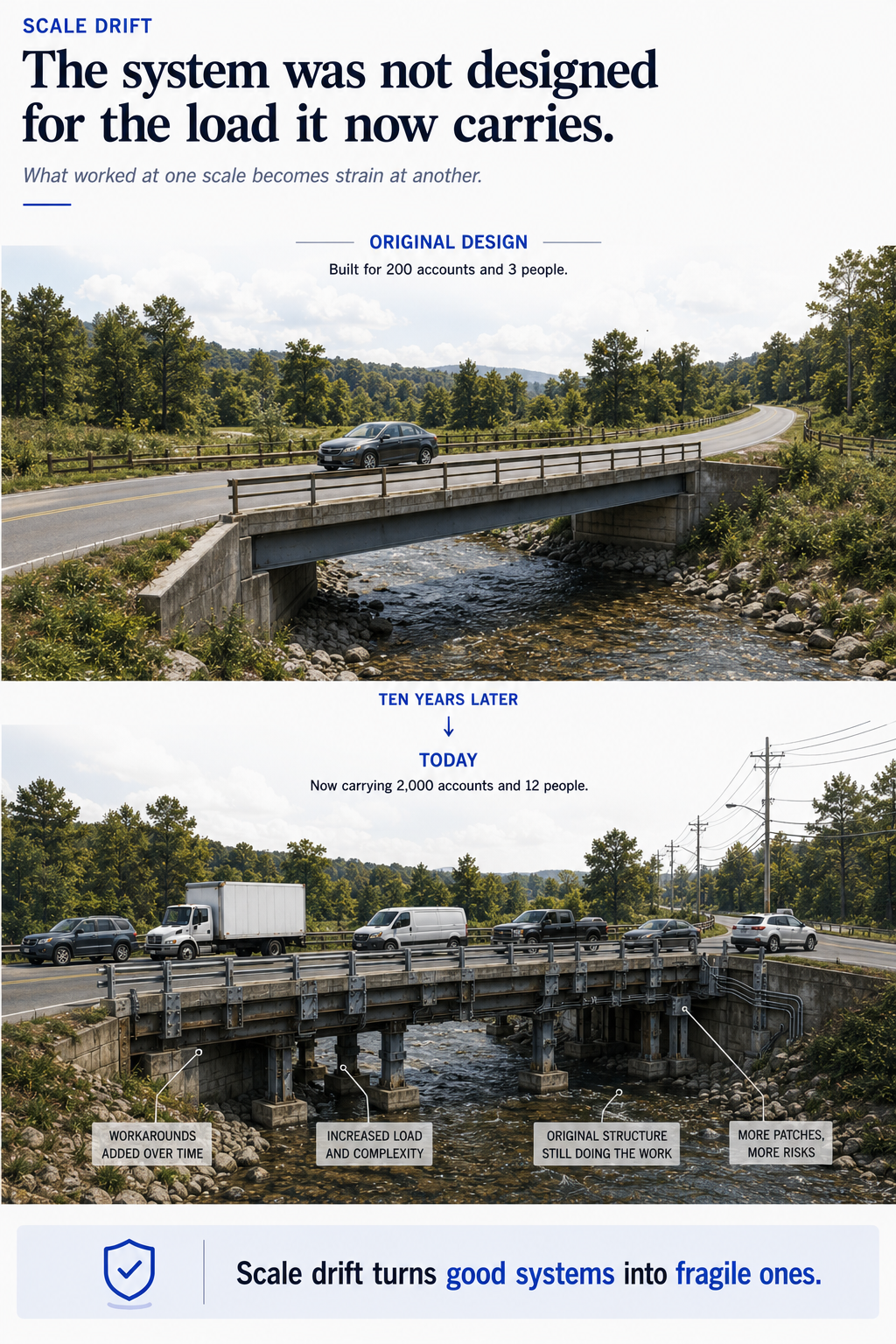
She is right that she built something good. She is also wrong that what was good then is still good now.
The IKEA Effect explains why both kinds of defense exist, and why they’re hard to distinguish from the inside. The work isn’t to dismiss craftsmanship or to treat all attachment as bias. It’s to know which is which in the operations you’ve inherited, in the operations you’ve built, and in the moment your team starts defending something a little louder than the evidence supports.
Both can be true. Telling them apart is the work.
READ FURTHER
Want the 2-page deep dive?
Download the one-sheeter for The IKEA Effect — a printable reference covering the principle, the research caveats, and the diagnostic questions, in a format designed to share with a leadership team.

Josh DeRocco
Executive Vice President
SparrowHawk Group
Schedule a Meeting
